I for one wouldn't want you to be any other than that guy. 
1 Like
I was able to convert my flatpak installed Brave to origin in 5 seconds.
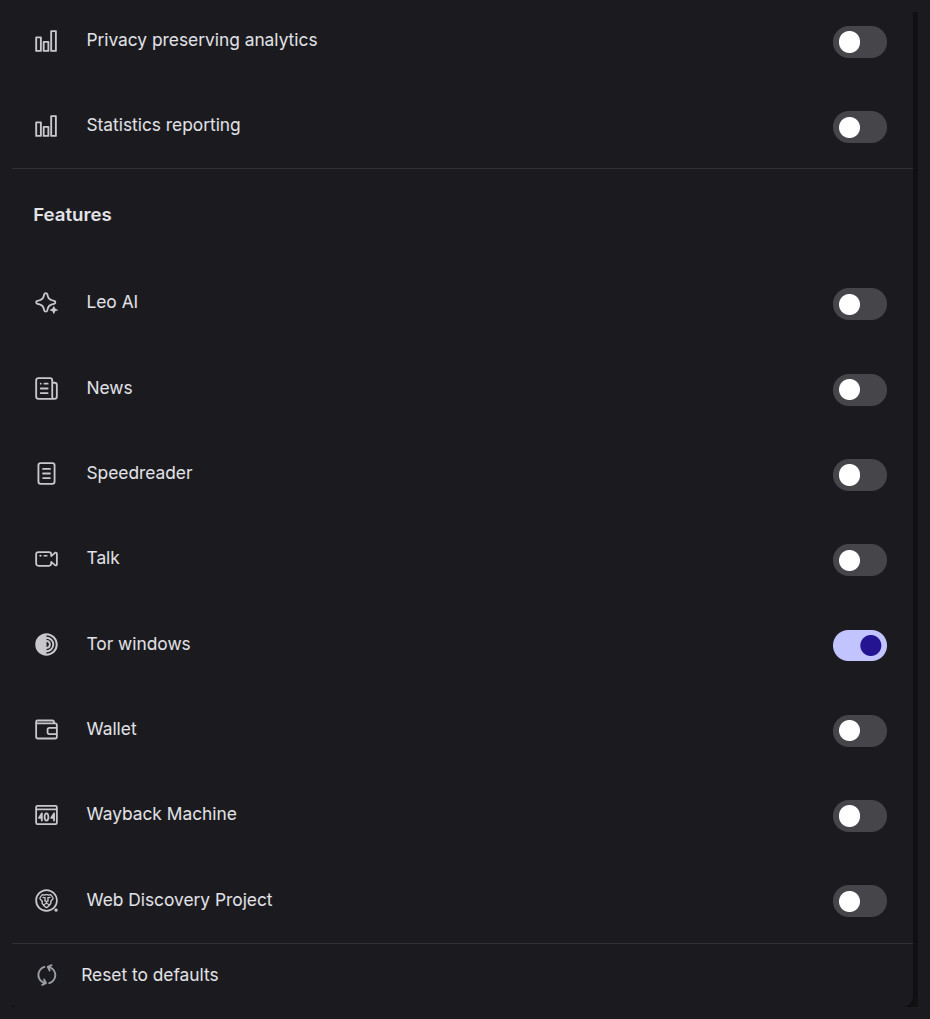
I was browsing Brave settings and came across a link to Origin
brave://settings/origin
from there was presented with switches to enable any components you want to keep.
Agreed, but for those who may have been considering it, $60 savings on a desirable browser could be a tipping point.
I could be wrong, but I believe these switches are only available on those that directly upgrade their existing Brave Browser install to Brave Origin.
If you install Brave Origin directly, they may not be present.
Being employed by a company in the past is not evidence of motive. I agree.
You are right to question correlation and assumption.
However...
Questioning is not the same as refuting. Questioning can lead to investigating which can lead to answers.
SystemD was initiated by Poettering and Seivers while both were not just employed by RedHat, but using RedHat systems, resources and support.
It was never officially a RedHat project. Unofficially, it was heralded within that framework and was adopted by Fedora almost immediately.
Today, it is independent, but for the vast majority of its run, its maintainers have consistently been Red Hat employees.
And Red Hat supplied the funding.
At that point, we are moving past coincidence or speculation - that is harder evidence.
Red Hat never officially took ownership of systemd, but they did everything they could to promote it, prop it up and support it, financially and with humanpower.
Even if Red Hat wants plausible deniability; I do not think it is incorrect for swarfendor437 to put the ownership back where it belongs. Because systemd would not exist today if not for Red Hat.
In fact the last Brave browser (classic) Brave 1.91.168 (Build officiel) (64 bits) have this option in linux without doing anything, just updating to the last release
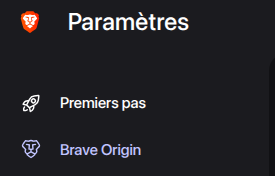
And as you say this option doesn't exist in Brave origin, of course
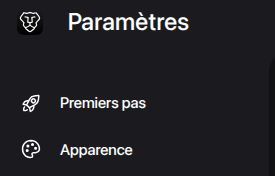
Offering more clarity:
I wish it did. It offers a paradox, instead.
And this, folks, is what making a mistake while convinced you are right looks like.
Forget Ladybird as an entity and forget who the critics are.
Let's weight the merit of the two fundamental opposing views.
The ability to use A.I. to swiftly create convincing injections into a codebase is a very real threat. We are standing at the dawn of this, with much unknown.
The costly signal of development is undermined by cheap A.I. output that could contaminate and infiltrate maintainers inboxes, overwhelming the project.
To close the doors seems like calculated risk management.
But this flies in the face of what FOSS is all about. This is a team effort and to exclude your team with a "Thanks for getting us off the ground, but we don't need you anymore because we do not trust you" is far more than a slap in the face.
It is a critical change in how the ecosystem works.
In overexplaining this, as the Ladybird announcement did, they seek to place the blame for this critical change at the feet of a Looming A.I. threat.
Who is the one making the mistake here? We have two sounding reasonable and valid arguments.
Ladybird is. Without doubt.
Because even if the reasoning Ladybird advances is perfectly valid; they did not address this in a valid way. They chose the strictest and most extreme path to solve a scaling and maintenance problem that other maintainers manage without shutting all the doors.
When you sweep aside all the valid arguments and noble justifications and the emotional opinions - that is what remains behind.
That is the settled dust.
They say, "now is the perfect time."
How... interesting.
It was the worst possible time.
They chose this action before launch. They chose to cut off their base; when they need their base the most.
They do not have a strong customer foundation - and they shut the doors before gaining one.
I think that if anyone needs a reason to shun Ladybird browser, this is the one that takes the cake. They turned on their own community before they even launched the product.
2 Likes

Thanks for the elaborate insight.
I don't think there is one browser out there that is immune to corruption, greed, etc
As the sparks fly upward....
This is the often asked question: "What is a good browser?"
Me: "uh... heh..."
"What do you recommend?"
Me: "Whatever suits you the most."
2 Likes
My thoughts exactly .... ain't it great that we don't have to choose between only two different browsers .... but instead have a myriad browsers to select from ..... I also like Vivaldi and used it for years .... I use Brave because I like the way it is set up ..... looks and it IMHO is not bogged down with bloat .... but "to each his own" as the old saying goes ..... LOL
1 Like
Hmm ... I find that difficult because I would seperarte here ''It comes from RedHat'' and ''RedHat supports it''. For me that is a very important Difference. When You look on the kernel.org Website, You see there Sponsors:

But only because they sponsor it, doesn't mean the Kernel belongs to them. I hope, my Explanation is understandable.
1 Like
It is. It is logical.
It is reasonable.
If you suddenly agreed with me, I would wonder about you.
Your logic is not just sound, but is as it should be. You should not be convinced by such meager connection.
Nor, do I actually feel a need to convince you on this. What matters is that we discuss these things on occasion. The moment passes.
But the data point has been set.
Not agreeing with a label, that is not rejection of the entire idea. It is only a refusal of a label.
I will wax, off topic, but demonstratively.
I will put this in a summary chunk.
Summary
In times past, an "open letter' hit the internet.
"Please stop theming our apps."
This open letter was from independent developers requesting Gnome stop theming their apps.
This letter materialized during a time when Gnome was pushing for CSD's instead of SSD's and pushing against theming, wanting app developers to do that instead of Gnome.
And then... the app developers sent an open letter asking for that very thing.
And this went around the web. Causing reactions, thoughts and opinions. It got a lot of support too.
But.
Then.
It turns out that the vast majority of signatures on the open letter were... Gnome Developers.
They sent a letter, to themselves, requesting that they, themselves, grant them what they, themselves, wanted.
Seriously?
Well, when asked about this, they tried to dodge. They said,"OK... yes, we are gnome developers but when we wrote that letter... We were doing so as developers of Other Apps, Too!"
That did not fly and they ended up adding a disclaimer to the open letter as it is displayed to this day.
What I am demonstrating by using this example of underhanded sneakiness is that the GnuLinux users are a rowdy bunch. You have witnessed it.
FireFox policy change?
Ladybird?
Wayland?
The upper portions in Linux and GnuLinux know, move under the radar. Be sneaky. When it hits the fan - you are standing to one side, looking innocent.
GnuLinux is a politically charged atmosphere in which patterns emerge, over and over.
It becomes less about getting the hard evidence... And more about pattern recognition.
@swarfendor437 and I disagree often.
But he and I both do look at patterns. We do not have the luxury of Hard Evidence all the time. We do have patterns to examine.
I cannot give you one card, upon which is written:
"We at Red Hat admit that we did indeed produce focus for SystemD.
Yours truly,
A contrite Red Hat Team."
We can point to years of hundreds of mailing lists, offhand comments, responses by Poettering, Conflicts between Torvalds and Seivers in which again and again, small remarks. Little statements. A brief sentence - stacks together.
I have not compiled this in a neat list I can post to you today. It was gradual.
A data point got set.
Then another.
Then I began to pay attention.
When Swarf says, "Yeah... It's Red Hat." He ain't exactly wrong.
Even if he cannot hand you a ledger of evidence on a platter.
Neither are you. Stay critical, scientific and skeptical. Keep asking the questions; keep questioning what you see.
The data points will stack and you will draw your Own Conclusions.
2 Likes
This is interesting I kept the old version of Brave and installed the new Brave Origin as a new install .... this is the first time I've had an update by Mint and it answered my question about whether or not Origin would auto download .... it does ....
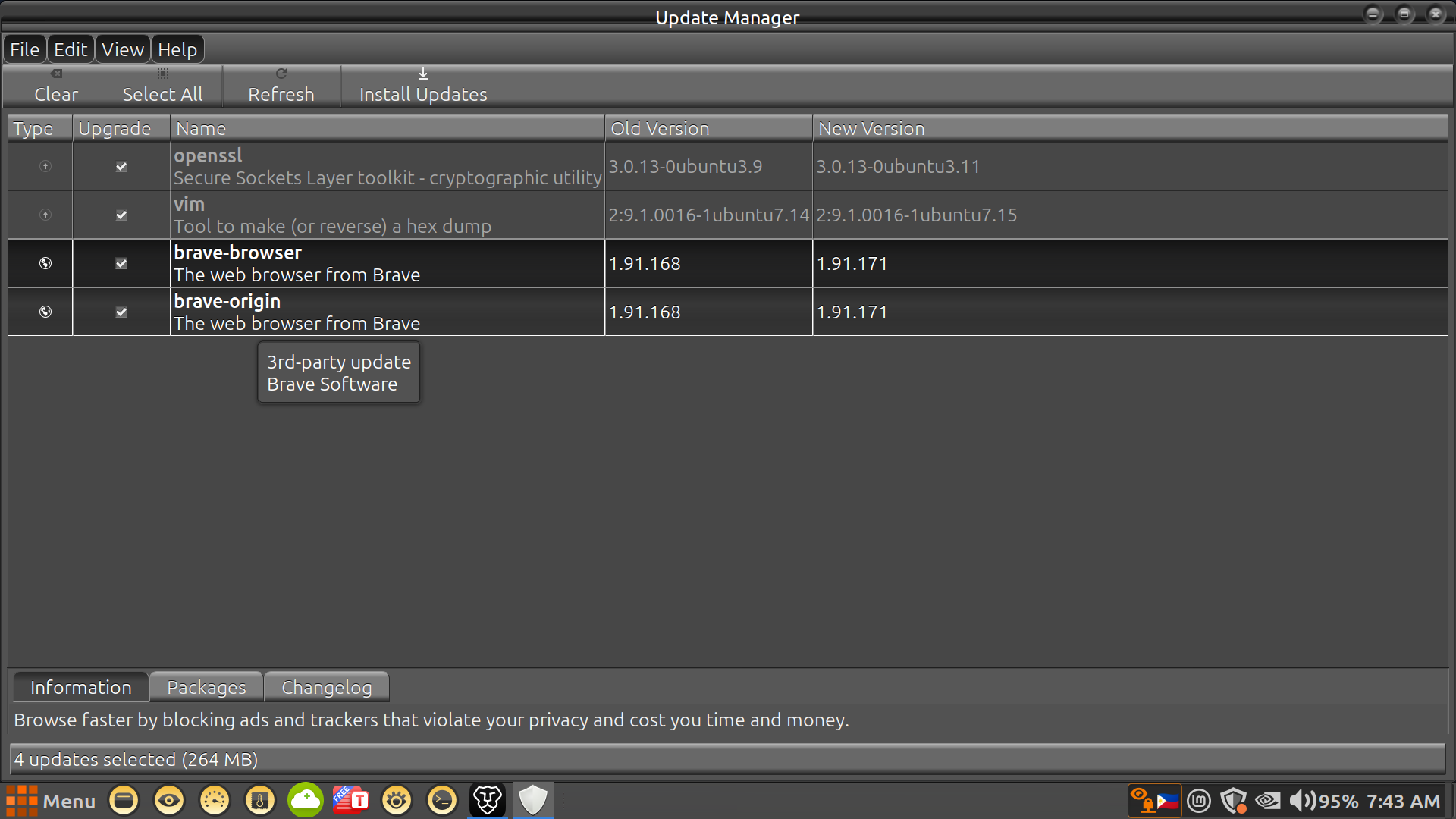
I kept wondering the same thing but apparently both versions share the same repository source.
1 Like
They do. There are not 2 seperated Repo's for Origin and the normal one.
1 Like
Thank you I was wondering about that as they both have the same version numbers ....
I think for Zorin the Upgraded version (regular Brave) of Origin is better for the average user than the Standalone version. The user gets to turn off features they don't like in Brave.
Here is a comparison of the two versions of Brave Origin:
2 Likes
Could be nice to have, yes. Now Brave is simply a Browser and packed with this whole Crypto, AI, Ad-Model Stuff. But at the same Time it can have a bit ... of a negative Impression, too.
1 Like