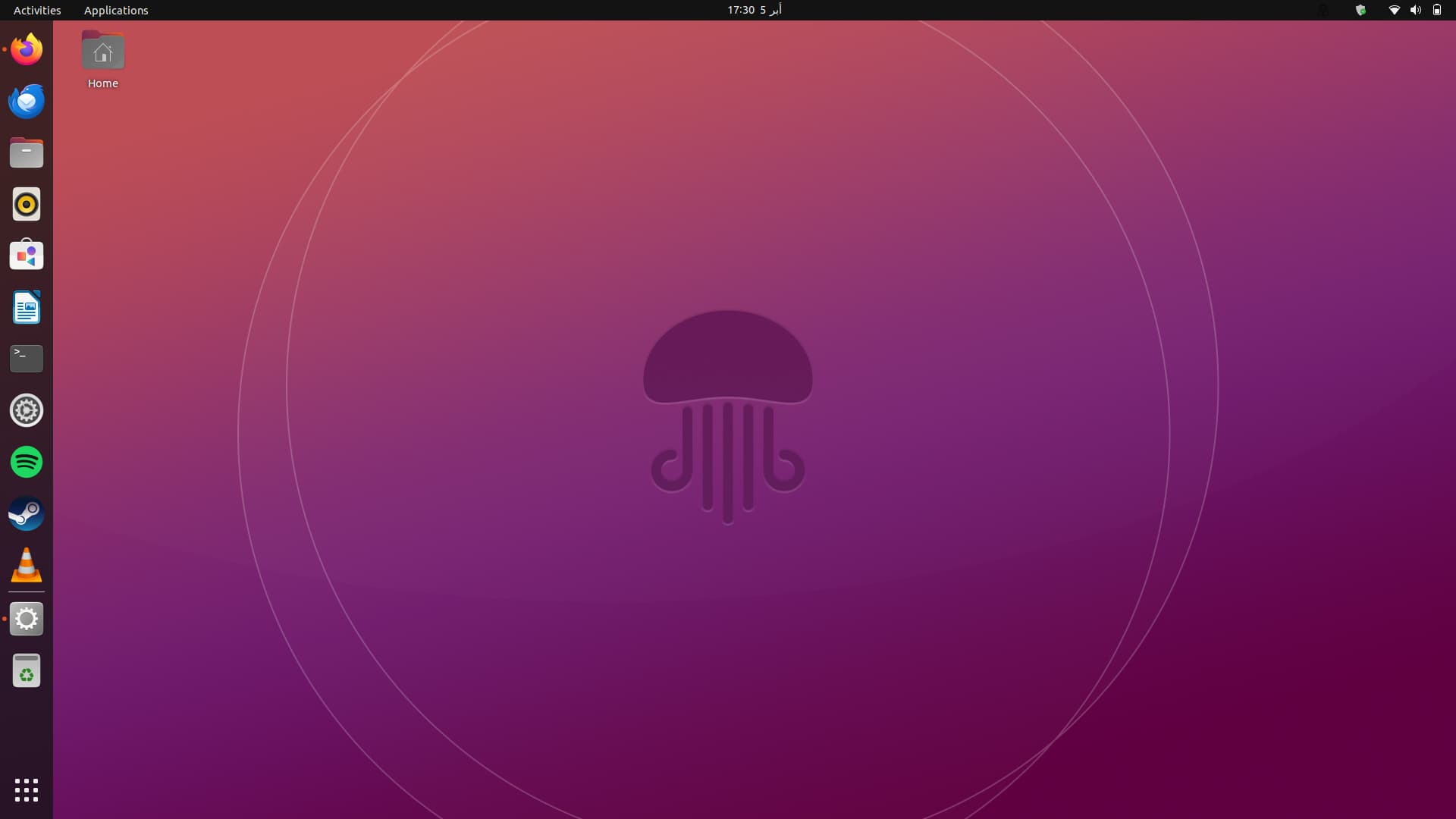
Hi, just installed Ubuntu 22.04 (Jammy Jellyfish). But I wanna get the look and feel of Zorin OS. How do I do that?
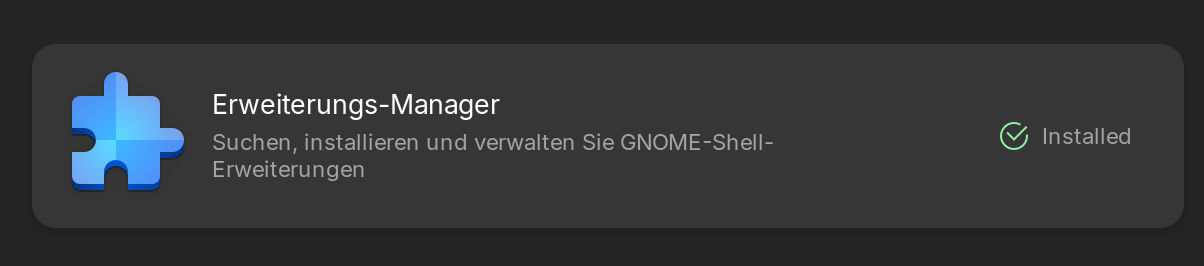
First you could install the Extensions Arcmenu and Dash To Panel. For that go into Gnome Software Center and look for the Extensions Manager:
After the Installation open it and go to the Browse Tab and there search for Arcmenu and Dash To Panel. Then You have a Taskbar (Dash To Panel) and a Startmenu (Arcmenu). Both are quite good to customize.
And because there is no Zorin Appearance You should install gnome-tweaks.
1 Like
You can download the Zorin themes from the link and install to .themes in the home folder or usr/share/themes. A .themes folder can be created if not there. Press crtl +h to show hidden folders in home. Tested on the latest Ubuntu development release.
Select the code tab and download and extract the.zip.
1 Like
Sorry, but I have to say this. The easiest way is to install a clean Zorin operating system. 
5 Likes
Agreed ,but there may be reasons why a user may not want to reinstall a system.
1 Like
tbh one can just take all the files from ubuntu, even programs maybe, and move them to zorin. both ubuntu based
Zorin is based on ubuntu, and it is almost a reskin. I would reccomend just using zorin as it accomplishes all the fuctions of ubuntu, if not more. Also if you just installed ubuntu you can pretty easily get a new OS
2 Likes
One good reason could be there is currently no way to create unattended install for zorin
Oh, i am going the way for a new pc with AI395+. The problem is that zorin does still have kernel 6.17 (okay, a custom kernel could be installed) the rocm skript does not know zorin and worse the mini pcs secure boot option - fedora works, ubuntu works, but zorin does not seem to have the same "certificate height".
Zorin is on Kernel 7.0 now.
1 Like
Hello,
If you want to use Zorin with your AI395+ I would suggest you to not use HWE kernel but OEM, because you will have too many problems with HWE.
Concerning secure boot if you don't have dual boot with Windows you don't need it, it's really a Microsoft thing
2 Likes
New kernel droped for me this morning ...is 7.0.0.29
I have to correct you on this. UEFI was not created by Microsoft, they had no technical input but were/are part of the UEFI forum. It was originally a project started by Intel in the late 1990's as the "Intel Boot Initiative".
Secure Boot/UEFI is designed to protect your machine from low-level attacks from bootkits. It came about because of the fact that the BIOS was not fully secure and vulnerable to attack. What Secure Boot does is ensure that there is nothing untoward happening at the low-level end of the system before it gives a handshake to the OS.
I think where this belief that it is a Microsoft thing comes from is down to the fact that they control the Certification and database of black-listed and white-listed Operating Systems.
Major GNU/Linux systems implement a "shim" to get around this issue.
When it comes to installing GNU/Linux on a machine with Secure Boot enabled, the best way of installing this is to use Ventoy as it includes a MOK Util that allows Ventoy.efi to be enrolled into the EFI system. (I discovered this last year, replacing Windows 10 for LMDE7 on a client's notebook, I did not have to disable Secure Boot). One item that must be disabled is Fast Boot, especially when dual-booting.
There is an excellent post on Reddit made by "gordonmessmer" here:
https://www.reddit.com/r/linuxquestions/comments/w7yg8x/do_i_need_secure_boot/
1 Like
When I said it's a Microsoft thing I wanna say that is required for Windows and not linux...
1 Like
I mean...
That does make it a Microsoft thing...
2 Likes
That is because they are control freaks.
@Aravisian well ultimately we could say it has been hi-jacked by Microsoft.
The fact remains that the BIOS on its own is not secure, and the intention was to ensure that the low-level boot process would not be vulnerable to low-level attacks.
What has happened is the Microsoft equivalent of Red Hat and Gnome deciding what is good for us.
We need to be independent thinkers and not think in line with the sheep herders, whoever they may be.
1 Like
That fact is, this is a fact.
And the necessity of securing it undeniable.
And you are right: M.S. hijacked Secure Boot, due to the majority market share.
That said; Secure Boot Can work on Zorin OS and can be beneficial and add layers of security.
But... I want to focus on a system that lacks Secure Boot entirely and ask the hard question: Is it safe?
@swarfendor437, you won't like this first part much... But answering in the affirmative requires acknowledging the beneficial layers of security added by systemd.
Since the cons of systemd are hashed out all over the forum and the web in general, let's forgo a tangent about how much we dislike SystemD and have a cheery moment of giving it (rare) praise.
A normal application or malware running as the user's account cannot modify:
/boot/vmlinuz-*
/boot/initrd.img-*
GRUB configuration
/usr/lib/systemd/system/*
/etc/systemd/system/*
And systemd has a strong privilege boundary. Once the system is running, systemd is PID 1 and is responsible for starting most of the system and a bad actor cannot hijack PID1.
This is where the Root Privilege boundary is the strong arm of GnuLinux - when users complain about having to enter a password; you can point to this thread.
Because an attacker often gets execution inside an existing service, systemD isolates processes. Compromising one service doesn't necessarily provide unrestricted access to the rest of the system. The bad actor would need to compromise each, in a chain and the method of each is different.
SystemD contains CAPS such as CAP_SYS_MODULE. So even if an attacker uses an exploit to compromise a service, they cannot simply load a kernel module. CAP_SYS_MODULE prevents sideways authorization.
We then have kernel module loading and kernel lockdown.
An attacker who obtains sufficiently powerful privileges (such as, he gets your root password) might try to install a malicious kernel module and arrange for it to load during boot.
Linux has several defenses around this:
- module signing can be enforced
- lockdown can restrict module loading
- module loading can be disabled entirely on systems that don't need it
- /etc/modprobe.d/ and module configuration require appropriate privileges to alter
This is not a full and in depth post on the layers - but you can see that this is not an exposed or vulnerable system. However...
Let's say a bad actor is In Your Home, obtains your Root password and can access the machine alone and elevate privileges - Then Secure Boot could add layers of security to help prevent persistent malware from init.
But... Honestly if you are at that point, you kind of have bigger fish to fry than Secure Boot.
6 Likes