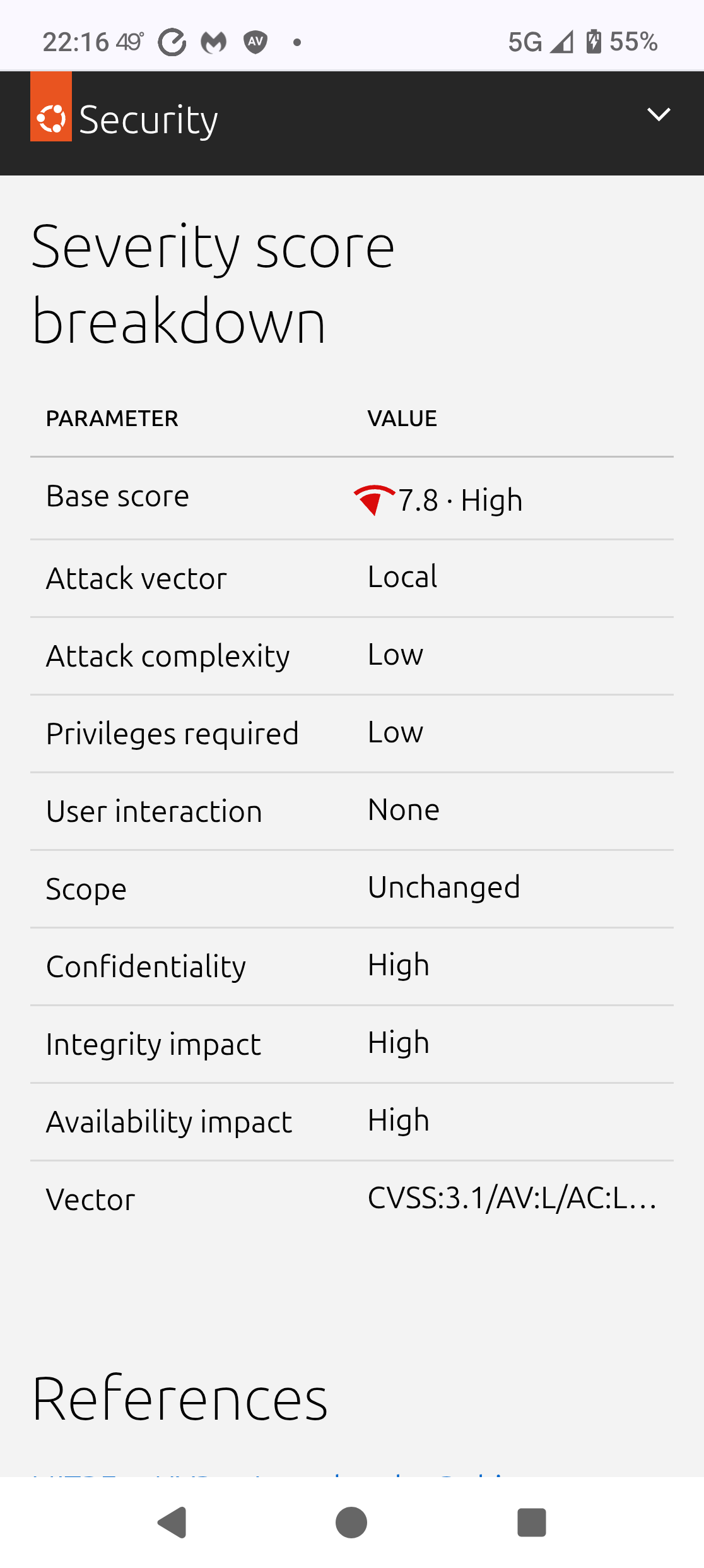
So I am confused by this advice about ubuntu-pro-client.
First of all, I am able to install ubuntu-pro-client from the command line. However, I am not able to see it in the software center. What am I unable to see details about this program in the Software center, and what am I doing wrong?
Second, when I run pro fix CVE-2026-31431, I get the following output.
~$ pro fix CVE-2026-31431
CVE-2026-31431: kmod update
 - https://ubuntu.com/security/CVE-2026-31431

3 affected source packages are installed: linux, linux-hwe-6.14, linux-hwe-6.17
(1/3) linux-hwe-6.14:
Sorry, no fix is available.
(2/3, 3/3) linux, linux-hwe-6.17:
A fix is coming soon. Try again tomorrow.

3 packages are still affected: linux, linux-hwe-6.14, linux-hwe-6.17
✘ CVE-2026-31431 is not resolved.
So it says that there is no fix and that the CVE is not resolved. But I have already done the kmod updates to fix the issue. Why is it saying that the CVE is not resolved?
Third, when I run pro fix CVE-2026-43500, I get the following output.
~$ pro fix CVE-2026-43500
CVE-2026-43500:
In the Linux kernel, the following vulnerability has been resolved:
rxrpc: Also unshare DATA/RESPONSE packets when paged frags are present
The DATA-packet handler in rxrpc_input_call_event() and the RESPONSE
handler in rxrpc_verify_response() copy the skb to a linear one before
calling into the security ops only when skb_cloned() is true.  An skb
that is not cloned but still carries externally-owned paged fragments
(e.g. SKBFL_SHARED_FRAG set by splice() into a UDP socket via
__ip_append_data, or a chained skb_has_frag_list()) falls through to
the in-place decryption path, which binds the frag pages directly into
the AEAD/skcipher SGL via skb_to_sgvec().
Extend the gate to also unshare when skb_has_frag_list() or
skb_has_shared_frag() is true.  This catches the splice-loopback vector
and other externally-shared frag sources while preserving the
zero-copy fast path for skbs whose frags are kernel-private (e.g. NIC
page_pool RX, GRO).  The OOM/trace handling already in place is reused.
 - https://ubuntu.com/security/CVE-2026-43500

3 affected source packages are installed: linux, linux-hwe-6.14, linux-hwe-6.17
(1/3) linux-hwe-6.14:
Sorry, no fix is available.
(2/3, 3/3) linux, linux-hwe-6.17:
Ubuntu security engineers are investigating this issue.

3 packages are still affected: linux, linux-hwe-6.14, linux-hwe-6.17
✘ CVE-2026-43500 is not resolved.
Here, I am confused. It says "In the Linux kernel, the following vulnerability has been resolved." But then it says that no fix is available for my packages. Has the vulnerability been patched, or has it not been patched?
Fourth, when I run pro fix CVE-2026-43284, I get the following output.
~$ pro fix CVE-2026-43284
CVE-2026-43284:
In the Linux kernel, the following vulnerability has been resolved:
xfrm: esp: avoid in-place decrypt on shared skb frags
MSG_SPLICE_PAGES can attach pages from a pipe directly to an skb. TCP
marks such skbs with SKBFL_SHARED_FRAG after skb_splice_from_iter(),
so later paths that may modify packet data can first make a private
copy. The IPv4/IPv6 datagram append paths did not set this flag when
splicing pages into UDP skbs.
That leaves an ESP-in-UDP packet made from shared pipe pages looking
like an ordinary uncloned nonlinear skb. ESP input then takes the no-COW
fast path for uncloned skbs without a frag_list and decrypts in place
over data that is not owned privately by the skb.
Mark IPv4/IPv6 datagram splice frags with SKBFL_SHARED_FRAG, matching
TCP. Also make ESP input fall back to skb_cow_data() when the flag is
present, so ESP does not decrypt externally backed frags in place.
Private nonlinear skb frags still use the existing fast path.
This intentionally does not change ESP output. In esp_output_head(),
the path that appends the ESP trailer to existing skb tailroom without
calling skb_cow_data() is not reachable for nonlinear skbs:
skb_tailroom() returns zero when skb->data_len is nonzero, while ESP
tailen is positive. Thus ESP output will either use the separate
destination-frag path or fall back to skb_cow_data().
 - https://ubuntu.com/security/CVE-2026-43284

3 affected source packages are installed: linux, linux-hwe-6.14, linux-hwe-6.17
(1/3) linux-hwe-6.14:
Sorry, no fix is available.
(2/3, 3/3) linux, linux-hwe-6.17:
Ubuntu security engineers are investigating this issue.

3 packages are still affected: linux, linux-hwe-6.14, linux-hwe-6.17
✘ CVE-2026-43284 is not resolved.
Here, I am confused. It says "In the Linux kernel, the following vulnerability has been resolved." But then it says that no fix is available for my packages. Has the vulnerability been patched, or has it not been patched?
Fifth, when I upgrade my system with sudo apt upgrade, I get the following output
Get more security updates through Ubuntu Pro with 'esm-apps' enabled:
  vlc-plugin-qt libvlc5 libmagickcore-6.q16-7t64 libzvbi-common vlc-data
  libqt5xml5t64 libvlccore9 qt5-gtk-platformtheme vlc imagemagick
  libqt5sql5t64 libavcodec-extra vlc-bin libmagickcore-6.q16-7-extra
  libqt5test5t64 vlc-l10n libcjson1 libavdevice60 ffmpeg libopenexr-3-1-30
  libpostproc57 python3-wheel vlc-plugin-samba buildah libqt5gui5t64
  libmbedcrypto7t64 libgstreamer-plugins-bad1.0-0 libzvbi0t64
  libqt5printsupport5t64 libavcodec-extra60 vlc-plugin-notify
  libqt5concurrent5t64 libavutil58 libqt5widgets5t64 imagemagick-6.q16
  libswscale7 podman libcryptx-perl libqt5dbus5t64 vlc-plugin-access-extra
  libqt5network5t64 vlc-plugin-skins2 vlc-plugin-video-splitter
  gir1.2-gst-plugins-bad-1.0 python3-filelock libswresample4
  imagemagick-6-common vlc-plugin-video-output libqt5sql5-sqlite libbotan-2-19
  7zip libavformat60 libvlc-bin libqt5core5t64 vlc-plugin-base
  vlc-plugin-visualization libavfilter9 libmagickwand-6.q16-7t64
Learn more about Ubuntu Pro at https://ubuntu.com/pro
Here I am very confused. I thought that since I was on ZorinOS, based on Ubuntu LTS, that I would receive security updates for my packages. I thought Canonical was pushing out security updates for the packages they maintain onto their normal repositories. Instead, Canonical is pushing out security updates to a second repository that I have to sign up for and enable?
Am I not safe if I choose to not sign up for a free subscription to Ubuntu Pro and use the normal repositories instead? What specific security vulnerabilities do these packages have in the main repositories, and what exactly is fixed in the esm-apps repositories?
Are there actually security vulnerabilities in my current packages right now, or would this message display for me regardless of if my current packages are fully updated, to advertise that Ubuntu Pro has alternate repositories for these packages?
Honestly, this upsets me. I think I should switch to Debian or a Debian-based distribution. I presume that Debian pushes out their security updates to their repositories, right?
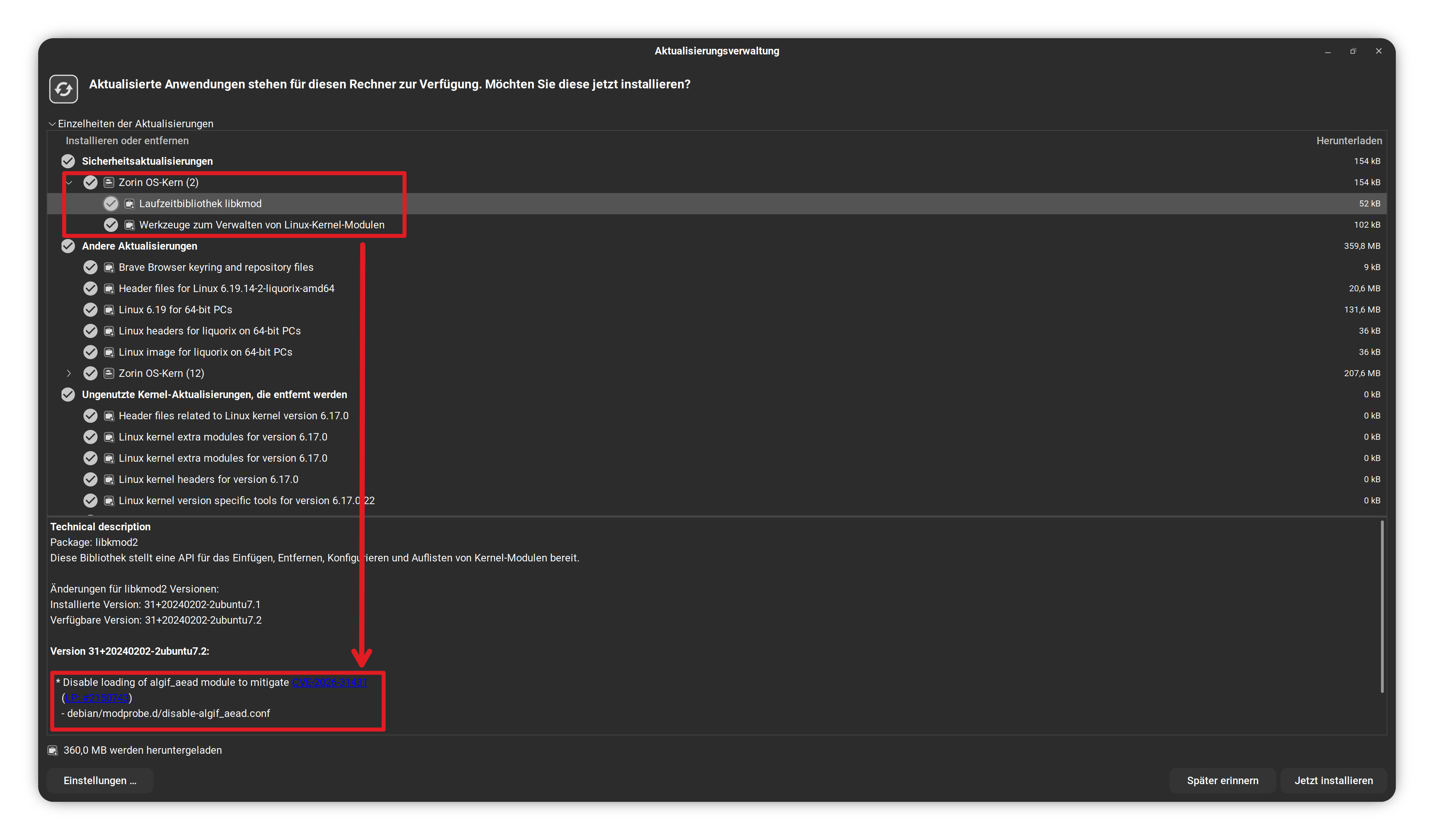
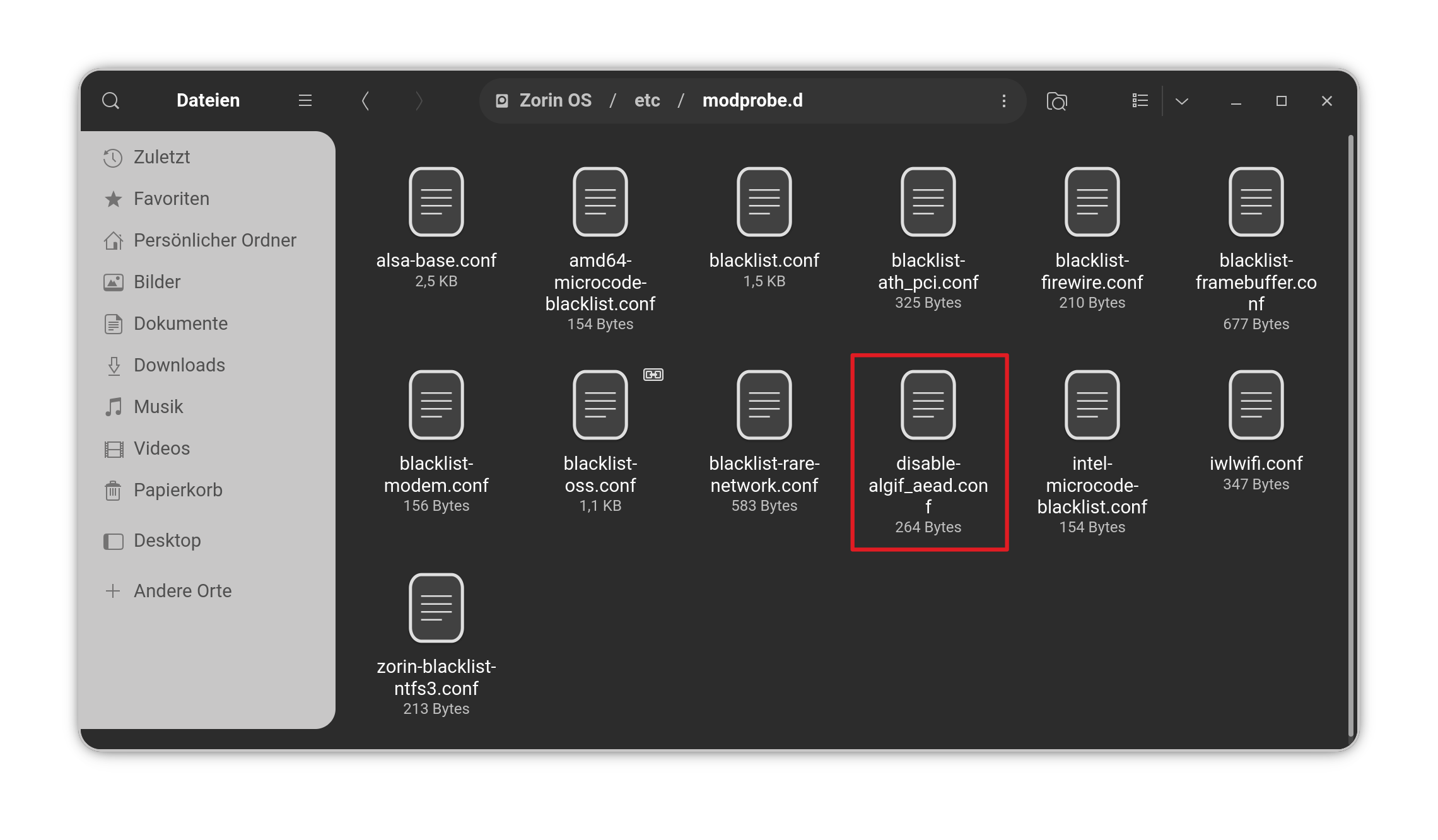
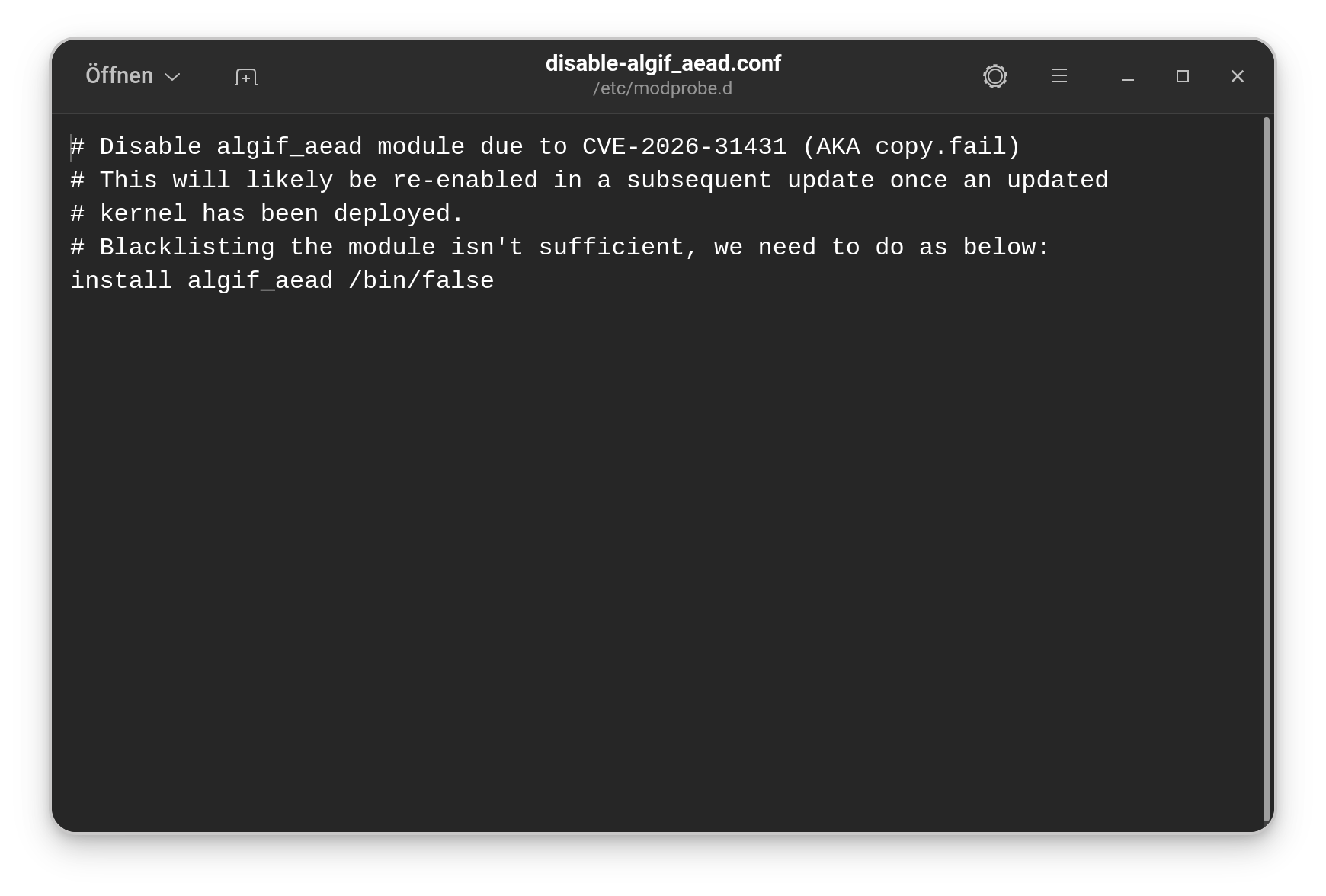

 Whenever I see such type thumbnails on videos, I ignore the video.